Easy Exercises That You Can Practice To Prevent Stress

Stress is a perfectly natural feeling induced by hormones that the brain releases. When people deal with tough situations in their daily lives, they feel stressed. The following article will teach you techniques for managing and minimizing stress.

Restrict your daily consumption of caffeine. Caffeine increases the presence of stress hormones in your body. Consider green tea as an alternative. It tends to bring stress levels down instead of raising them.

Living a less stressful life is not as impossible as you think it is. Once you become more attuned to different causes of stress in your life, you will be able to take the necessary actions to avoid or reduce exposure to these things.

When you take time to keep a journal, the very act of putting your thoughts on paper can help you keep your stress level down. If you are uncomfortable about sharing your feelings of anxiety with others, putting your feelings down on paper can give you a sense of release and control that will help reduce the stress. As an added bonus, writing things down gives you a record that you can look at later to see how you handled stressful situations previously.

Preventing StressTry smiling frequently as a means to combat stress. Smiling involves your limbic system, which helps to regulate your emotions. Smiling tilts your limbic system, allowing you to be more calm and less stressed.

Being honest can cut down on your stress and anxiety levels. Studies show that small lies can create a lot of guilt and make many people anxious about being caught.

Become attuned to concentrating on your breathing. Whether you believe this is a myth, deep breaths can give you a relaxed feeling because there is is more oxygen in your bloodstream. Typically, people are inclined to breathe from the upper chest when they experience high levels of stress. This kind of breathing, usually shallow and fast, makes the heart beat faster and tightens up the chest muscles. This can make you feel even more anxiety.

Listening or playing music is a simple way you can reduce your stress. You can either just sit back and relax and listen to music, or you can break out an instrument and play some tunes of your own. You can listen to soothing music while doing chores or sleeping as a way to relax and lower stress. No matter how you choose to apply it, music is considered a wonderful choice for getting over stress.

The information in this article should help you to better understand what causes stress and how to control it. Simply using a couple of the tips in this article, you will be able to minimize your stress levels.

Personal Development And Meditation Make Good Working Partners

Personal development is something that anyone can, and should do. This can range from developing better personal finances or a healthier lifestyle. It’s always a good idea to improve different aspects of your life. You can always discover some area of your life that you can improve on. You are sure to have a much happier and healthier life if you find a way to develop and maintain good habits every day.

You will miss an opportunity if you avoid making the right decision regarding personal development. Make decisions based on your own knowledge and what you can learn from your research. Great decisions encourage sharp instincts. Even when you make a bad decision, you can learn valuable lessons from your experience. When you learn from your mistakes, you are less likely to repeat them.

When putting effort into your personal development, assign a high value to that which is the best. You should always strive to do your best in all aspects of your life.

Stop and realize that you are in one place, and the person you want to be is an entirely different place. You must bridge that gap. You need to understand and embrace this before you can move forward. If you fail to notice the difference between your current state and your desired state, you will never reach self-actualization.

Give yourself a boost of confidence by reciting all the things you like about yourself. Keep a list of your good qualities in your wallet. Carry this list with you at all times, and take it out when you need to pick yourself up. Even better, you should videotape yourself, reading the list into the camera and watch this video frequently. Why should you do this?

Are you having trouble meeting someone that you can love and call your own? Think about looking on the Internet. These days, forty percent of all relationships start on the Internet. It could be your significant other is out there waiting for you to give the Internet a shot. Both have their advantages and disadvantages.

If you want to get more from your personal development then take care of your physical self. Make sure you are getting enough sleep, eating a healthy diet, and exercising on a regular schedule so that you have enough energy during the day, and you will find it will be a little easier to reach success. Though many take these simple things for granted, they are often hard to incorporate into personal habits.

They say that speaking and listening are equally important. This holds true in many areas of your life, including personal development. You should not only listen closely to others, but to yourself as well. You will have a hard time finding what your goals are if you are not listening to yourself.

Be modest. We are each just a tiny little bit of the universe. Everyone should be willing to learn as much as they can from others. Stay open-minded and keep looking for new opportunities. If you stay open-minded, you will be poised to learn something new when the opportunity arises.

Quit worrying so much. It is often the case that the things you spend time worrying about will never actually occur. Rather than worrying, think about the worst thing that could happen and make a plan that you can put into motion if that occurs. Being prepared gives you the freedom to enjoy your life more fully.

You must determine what you would like to achieve in your life. Once you've done this, get out there and do it. If you spend all your time dreaming about what you want to happen in your life, yet do little to create that life, that life will never happen. Therefore, you should get off your butt, and actually do something to turn your dream into a reality.

Personal development goals that improve your health will improve many other areas of your life. When they are in good healthy they will feel great. You can also avoid visits to the doctor and have a clearer mindset to focus on your goals. In other words, better health is one of the most gratifying goals you can achieve.

The majority of employers that you encounter won’t care about the school you graduated from. They care about how successful you are at doing your job. Larger companies, such as financial institutions, may be the exception to this. However, the important thing is to get a good education and increase your opportunities.

Leadership is about exercising authority, but good leaders are humble, too. There is an element of service that makes up the character of a leader, as it enables them to lead with gentleness. A real leader will practice integrity, and uphold a strong sense of morals. These are all things that one must have to be a successful leader.

If you want to improve yourself, write down a specific list of things you want to improve. As an example, if confidence is what you are after, jot it down. Think about as many things as you can to gain confidence. You then want to position yourself so you can make this happen. By pursuing your goals aggressively and systematically, you are more likely to succeed.

You should always treat everyone with respect, regardless of who they are or what they are able to do for you. The way you interact with people, and the respect you show, says a lot about you.

Therapy might be beneficial if your problems are severe. Self help books are useful to an extent, but they lack the substance or personal touch that a therapist can provide to a patient. Sometimes, success happens by simply talking problems through. You can’t have a discussion with a book.

It may become discouraging to begin developing better personal habits and lifestyles, but once you start noticing your life developing towards a better future, you will never want to stop. You can always develop better ways to do things and it’s important to always try hard towards any personal development goals you have.

The Autonomic Nervous System and Sociality

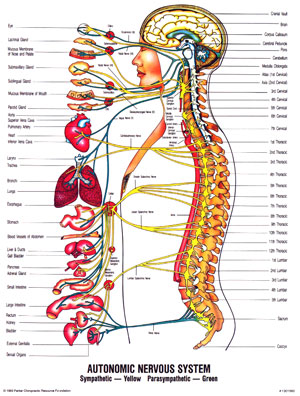
autonomic nervous systemOur capability for affective awareness and emotional expression is influenced by the evolutionary state of our brain, autonomic nervous system, and pathways through which they communicate. These capabilities are key to social communication with other humans.

Of course, the systems underlying our sociality are tightly interwoven with neural circuits involved in survival, such as homeostatic, endocrine, and autonomic processes. Visceral homeostatic maintenance is vital for survival as well, therefore our social communication circuits are deeply dependent on those that regulate basic visceral homeostasis.

It’s evident from evolution as well that the autonomic nervous system is important for how we experience affect, behave socially, and communicate vocally and visually. This can be seen through polyvagal theory, where as mammals evolved from their reptilian ancestors, the vagal efferent pathway arose to produce more and more sophisticated behavioral functions – from immobilization and death feigning in the unymelinated vagus to advanced social communication, self-control, and calming in the modern myelinated vagus.

This vagal pathway serves as a link between autonomic nervous system regulation and brain-stem-related cranial nerve control of facial muscles and expression, and social communication.

How to Bring Motivation to the Classroom

Everyone has been in a rut – when you feel frustrated and aren’t experiencing any motivation to carry on with whatever you are doing.

What’s really at the root of this problem though? Motivation is a funny word that teachers often use incorrectly on their students. Many teachers claim that their students are unmotivated, as if motivation was an intrinsic character trait that everybody had different levels of. This isn’t the right way to think about motivation. In fact, motivation and drive comes from pleasure of accomplishment and incremental success. If you give a child a task to do, like assembly of a large jigsaw puzzle, and they work on it for a while with no discernable progress, it’s obvious that they’ll get frustrated and lose motivation to continue. However, if they’re able to figure out the first step of filtering out the edge and corner pieces and start assembling the frame of the jigsaw puzzle, they’ll experience continual progress and replenished motivation to keep solving the puzzle.

So here is the source of motivation – it comes from progress. This is particularly important in the classroom. If teachers think that students are unmotivated, the students should not be blamed – this means that the learning process and the actions of the teacher must be adjusted. Following this model, the primary job of teachers should be to ensure that every student is making progress and experiencing incremental success in the learning process. This is what games are so good at and why all children love them – it’s not because they’re easy.

In fact, games are oftentimes fiendishly difficult and challenge stretch the players’ abilities to the limit. However, when players overcome a challenge and make visible progress, they experience a rush of pleasure and continued motivation to keep playing. Why is it, then, that games are so hard but kids still want to play them, and the same doesn’t hold true for school? The answer is that school is oftentimes like a poorly-designed game. When students fall behind, there is a lack of support. They don’t understand what’s being taught, and are never given a chance to catch up. Failure is fatal. Good games, however, don’t punish failure. They always provide an avenue for players to see incremental success and make headway. Learning should be the same way – teachers must support the continual learning progress of students by keenly observing them and ensuring they are being properly and adequately challenged. This should be regarded as a powerful tool to keep their motivation levels high.

Related to this same point is the concept of social learning. The most effective type of new learning comes from binding of new knowledge to past experiences and knowledge and from making the material at hand both meaningful and relevant to students. Who better to socialize and learn with than a child’s peers, whose cognitive networks and past experiences are very similar? Peer-supported learning and interaction with others provides a backdrop upon which kids can measure their progress and understand the success they’ve achieved already. The teacher should support this process and manage the presentation of challenges and assignments to make sure that students don’t get stuck, but see real personal progress to keep them motivated.

Why do Games Need Neuroscience? or,The Importance of Having a Theory

The field of game design is maturing. For the past several decades, games have experienced many revolutions, most of which up until recently were driven by technological advances and development of next-generation consoles. This process is still ongoing, but with graphics technology approaching photorealistic levels and the power of computer hardware today able to simulate highly detailed real-world environments, most future game advances will be driven not primarily by technology but mostly by development of new and innovative game mechanics. One of my strong beliefs is that the next major advance in games, and even entertainment in general, will come from the incorporation of neuroscience into game mechanics and player experience design.

Game designers have struggled for many, many years to understand how to produce fun games. There have been many successes and many failures as well. Designers deliver entertainment to their players, and they design games to be fun by instinct, but often cannot fully and precisely explain how they inject fun into games. Many great game designers work by “feel,” playing through their levels over and over again and tweaking the gameplay loops that don’t feel fun to them or that most people would not find fun.

There’s nothing wrong with using intuition as a design approach, but if designers cannot pinpoint what makes a game fun, the effectiveness of game design is compromised and we are then stuck in a more or less primitive stage of development. Game design is seen as an art, not a science. This means that what makes a game fun is not tightly and accurately defined and at least difficult to pass down to new game designers or the next generation in a systematic manner.

These concerns are reflected in the fact that over the past decade, the game industry has become increasingly hit-driven. World of Warcraft chomps up over 60% of MMO market share and the top 20 casual games occupy 75% of the market. This has forced the entire game industry to become conservative and very risk-averse, suppressing innovation and radical design and in so doing, making it difficult for new types of games to flourish.

I believe that the remedy to this problem lies in use of neuroscientific rigor in game design. Games, at their core, are systems that must be learned. According to Raph Koster (one of the MMO gods), games are “rule-based systems / simulations that facilitate and encourage a user to explore and learn the properties of their possibility space through the use of feedback mechanisms.” If your game isn’t quickly learnable, players will get frustrated and it will fail. It’s natural, then, that the origin of learning, the brain, should not only be taken into consideration, but regarded as a guiding light when designing learning-based systems like games, even purely entertainment-based games.

First of all, neuroscience can be used to study and understand the elusive concept of fun. Design of reward systems and schedules and understanding of player pleasure and motivations must obviously be based on how the brain works. As has been widely reported, World of Warcraft’s variable ratio reward schedule essentially hijacks the reward systems of the brain to keep players playing forever. There are many other ways to generate fun that have yet to be described in a scientific manner.

Secondly, neuroscience will provide general rules and formulas to explain what the best game designers have discovered by instinct. We need to improve the current “hit-or-miss through intuition and observation” attitude upon which many game are based and attempt to create the Holy Grail – a Neuroscience Theory of Fun. Finding these neuroscientific patterns in the world to explain how to make games fun to learn and play will drive the whole industry forward.

In a more broadly applicable sense, I firmly believe in the importance of Having a Theory. Understanding the patterns of behavior and design principles for success will provide a road map for greater achievements in the future. These aforementioned principles apply essentially to any industry, any business, and in fact, any single human being. If you collect and organize your experiences into a theory or an organizing philosophy or structure, you’ll be able to teach more effectively, spread the knowledge, and reproduce and expand your successes.

Malcolm Gladwell said in his New York Times interview, “People are experience-rich and theory-poor… people who are busy doing things don’t have opportunities to collect and organize their experiences and make sense of them.” In that same spirit, neuroscience will change the whole game for the game industry and allow creation of a “neuroscientific theory of fun” that can be accurately and precisely applied in the future.